TUNING ECU
Inside the ECU: How Mapping Shapes Modern Motorcycles
par David Gingras
The Most Powerful Part of Your Bike Is Invisible
Walk through any motorcycle show, and you’ll hear the same conversations over and over again. Exhausts, suspension, tires—these are the upgrades riders naturally gravitate toward. But bring up ECUs, and the discussion often fades. At the last show, one thing stood out clearly to the D-Spec team: many riders had heard of ECU tuning, but very few truly understood what it does—or how much influence it has on the behavior of a modern motorcycle.
That disconnect is surprising, because in reality, the ECU is the single most influential performance component on a modern off-road bike. Not because it adds the most horsepower on paper, but because it controls how the entire engine behaves in real conditions.
If you had to reduce it to one idea, the ECU is simple:
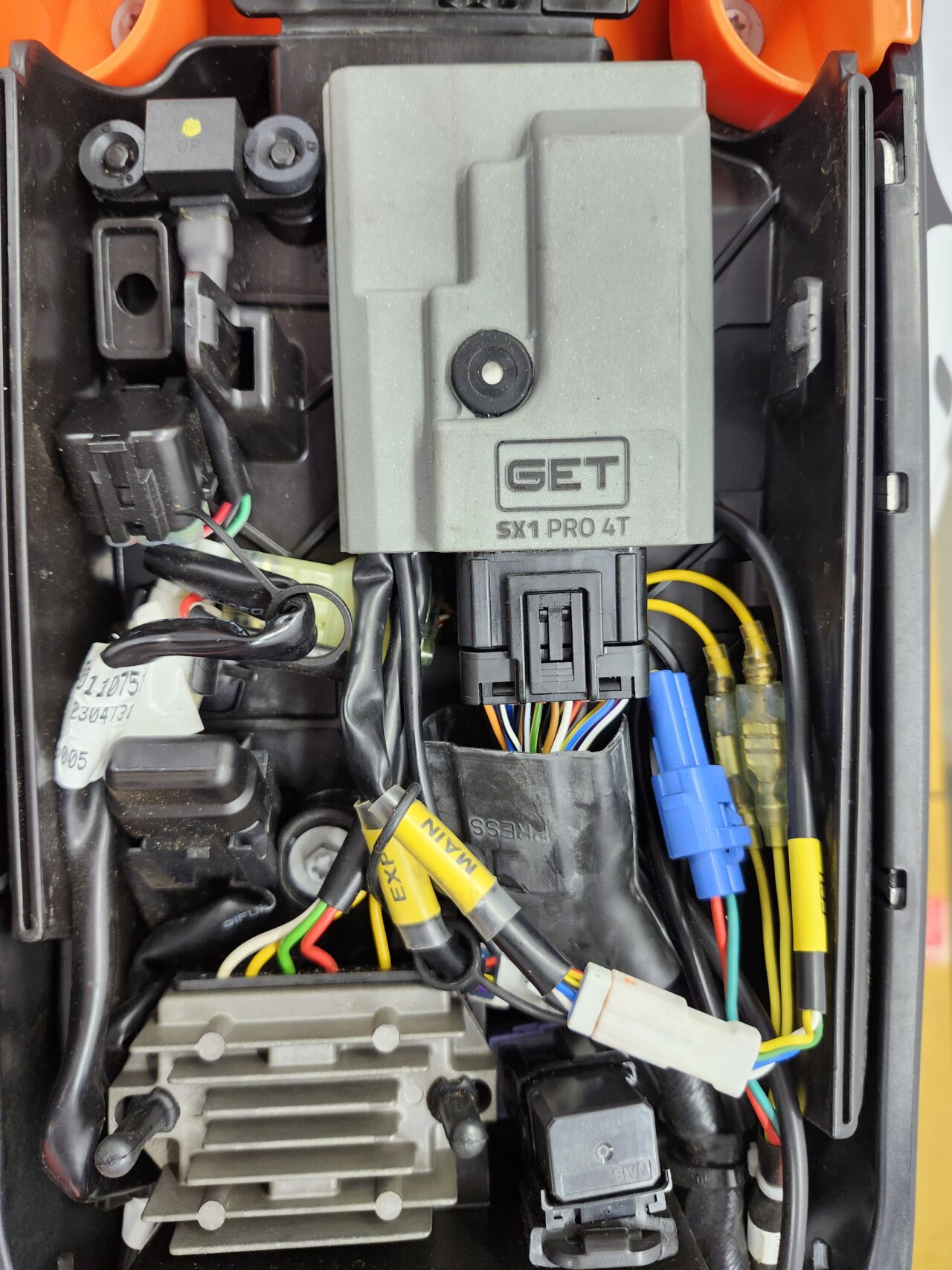
“The ECU is the brain of the fuel injection system. It determines how much fuel is injected and when ignition occurs, based on sensor data and its internal programming.”
But that definition barely scratches the surface. Modern ECUs don’t just control fuel—they manage ignition timing, throttle response, engine braking behavior, rev limits, environmental corrections, and, in some cases, even gear-dependent strategies.
In other words, the ECU doesn’t just run the engine. It defines how the engine feels.
To understand why this matters, it helps to look back. In the carburetor era, tuning meant physically changing components—jets, needles, float height. It was mechanical, reactive, and limited.
Electronic fuel injection changed everything. Instead of swapping parts, tuning became a matter of adjusting parameters—hundreds of them. Fuel delivery, ignition timing, enrichment strategies, and environmental corrections can now be controlled with a level of precision that was simply impossible before. That precision is what allows modern bikes to deliver both higher performance and greater consistency across changing conditions.
An ECU doesn’t operate in isolation. It relies on a network of sensors to understand what the engine is doing in real time. Throttle position, engine speed, engine load, intake air temperature, and coolant temperature all feed into the system.
From these inputs, the ECU continuously calculates two critical outputs: how much fuel to inject, and when to ignite the mixture. Those decisions are not fixed—they adapt based on conditions. A cold engine will require different fueling than a hot one. A heavily loaded engine climbing a hill behaves differently than one cruising at steady speed.
This constant adjustment is what allows modern engines to be both powerful and manageable.
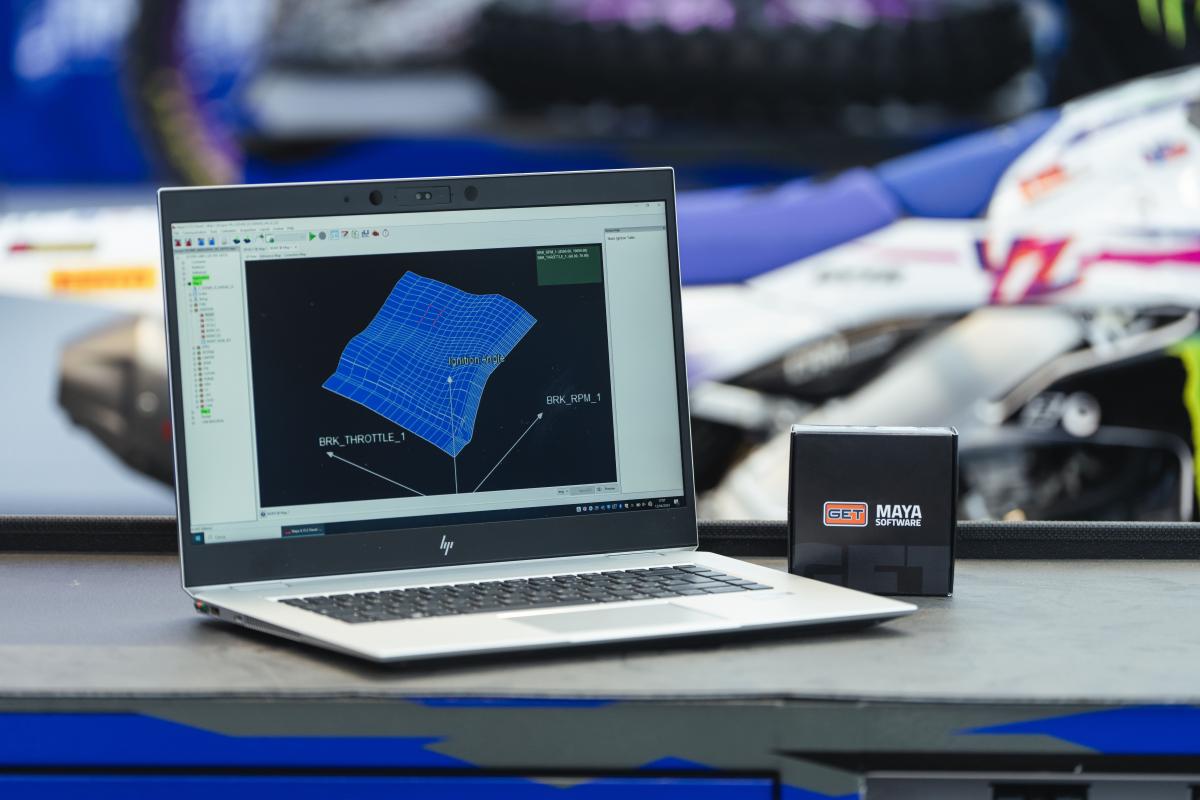
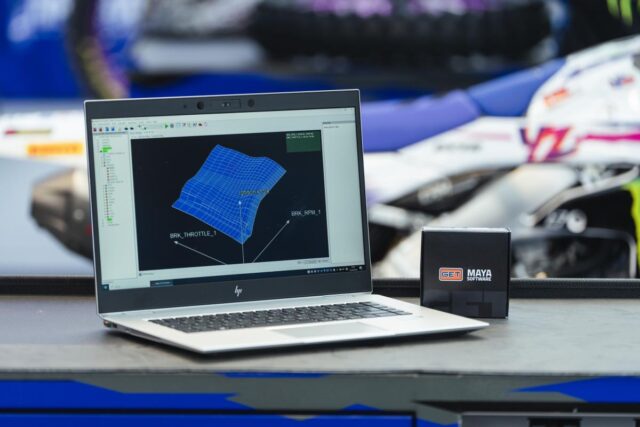
At the core of ECU control lies the concept of mapping. Most off-road ECUs operate using tables built around two primary axes: throttle position and engine speed. Every combination of those variables corresponds to specific values for fuel injection, ignition timing, and other parameters.
Visually, these maps resemble a three-dimensional surface.
“It looks like a green hill—like something you’d see out west.”
Behind that surface are hundreds of individual data points. Each one represents a decision. And the ECU is constantly navigating through them, adapting in real time as conditions change.
Everything Is Interconnected
One of the most misunderstood aspects of ECU tuning is how interconnected everything is. Fuel influences combustion temperature. Temperature affects ignition behavior. Ignition timing shapes torque delivery. Torque directly impacts traction.
“Everything is interrelated.”
Because of this, even small changes can have cascading effects. But not every change produces a noticeable result. Some adjustments are critical but subtle, while others dramatically alter how the bike behaves. The challenge lies in knowing where to act—and where not to.
While ECU calibration involves many variables, four key elements define most of the riding experience: ignition timing, fuel injection, throttle response, and deceleration behavior.
Ignition timing determines when combustion occurs in relation to piston position. Done correctly, it maximizes the mechanical advantage of the combustion process. Done poorly, it either wastes energy or works against the engine itself.
“The margin is narrow. A few degrees can be enough to ruin everything.”
Fuel injection plays an equally critical role. The quantity of fuel delivered affects not only power output, but also combustion temperature and engine durability. The relationship between fueling and torque is direct—optimize one, and you influence the other.
Throttle response is often the first thing a rider notices. In off-road conditions, where the throttle is constantly being modulated, a predictable and controlled response makes a significant difference. A well-calibrated engine feels connected—responding naturally without being overly aggressive or delayed.
Deceleration behavior is just as important, even if it receives less attention. Entering corners or navigating technical terrain, the way the engine reacts when the throttle closes has a direct impact on stability and control. Too much engine braking can unsettle the chassis, while too little can reduce front-end traction.
Why Copy-Paste Maps Don’t Work
Despite the complexity of modern ECUs, there is still a persistent belief that maps can simply be transferred from one bike to another. In reality, mapping is highly dependent on the system it is applied to.
Intake configuration, exhaust flow, engine condition, environmental factors, and even rider input all influence how a map behaves. A calibration that works well on one setup can become unstable—or even damaging—on another. Issues such as erratic throttle response, overheating, or inconsistent performance are often the result of mismatched components.
A map is not a universal upgrade. It is part of a system.
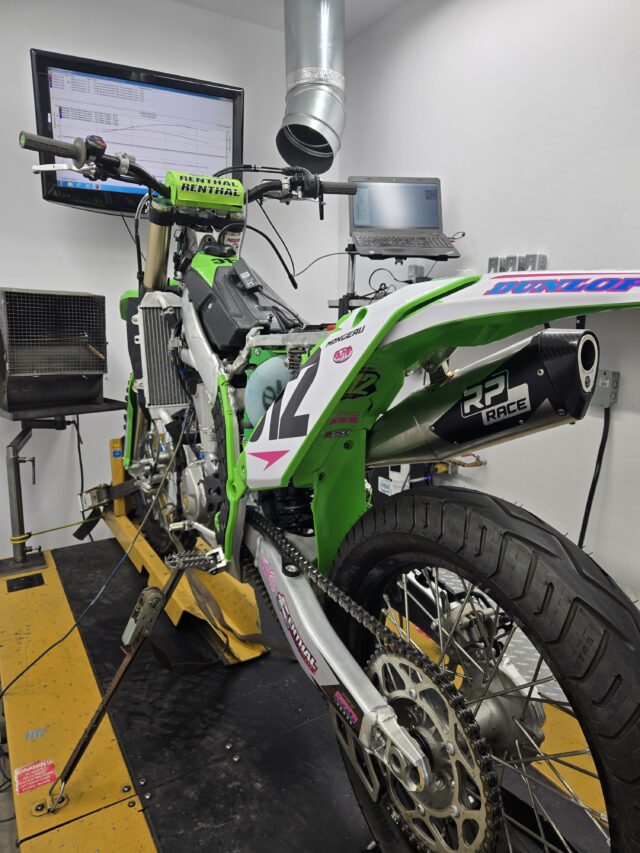
At D-Spec, tuning begins with fundamentals. The first step is always to ensure the motorcycle is mechanically sound. From there, the bike is placed on the dyno, where controlled conditions allow for precise calibration across throttle positions and engine speeds.
The dyno provides a consistent environment to build the base fuel map and establish a reliable starting point. But it does not tell the entire story. Real-world testing remains essential, particularly for aspects that cannot be fully measured on the bench—such as throttle transitions and engine braking behavior.
Rider feedback plays a critical role in refining the final result. In most cases, the bike leaves the dyno already very close to its optimal configuration.
“Most bikes leave the dyno at about 99% of the truth.”
From there, small adjustments can be made to match specific preferences or riding conditions.
When a Bike Finally Makes Sense
When everything is properly calibrated, the difference is not always about peak power. It’s about how the bike behaves as a whole. “. The consistency and predictability create confidence.”. Riders often describe the change in simple terms: the bike feels more controlled, more intuitive. Throttle inputs translate cleanly into motion, and the powerband becomes easier to use across a wider range.“The bike feels more obedient.”. At that point, the machine stops working against the rider and starts working with them.
That’s why ECU mapping is often one of the most overlooked steps in performance tuning. Not because it’s complicated, but because it’s misunderstood.“If you’re skeptical, try it. It’s the number one step in the search for performance.”. Not because it produces the biggest number on a dyno chart—but because it influences everything else. Horsepower figures are easy to compare. Easy to market. Easy to misunderstand. But they don’t define the riding experience.
The ECU does.
It is the system that connects fuel, ignition, airflow, and rider input into a single, coherent behavior. And when it’s calibrated correctly, the difference isn’t just measurable—it’s something you feel every time you ride.
David Gingras
With over 20 years in the Dirt Bike world, and EFI tuning in-depth expertise, David helps riders of all levels — including pros at the Canadian Championship level — turn their machines into true performance tools. In his articles, he breaks down technical concepts with clarity, shares dyno and track-tested methods and gives you the insights you need to unlock every ounce of performance… where it really matters.
Articles similaires

Inside the ECU: How Mapping Shapes Modern Motorcycles
Capteurs, ignition timing, throttle response, engine braking and fuel mapping — this article dives inside the real logic of a modern ECU and explains why tuning has such a massive impact on the way a motorcycle actually feels to ride.

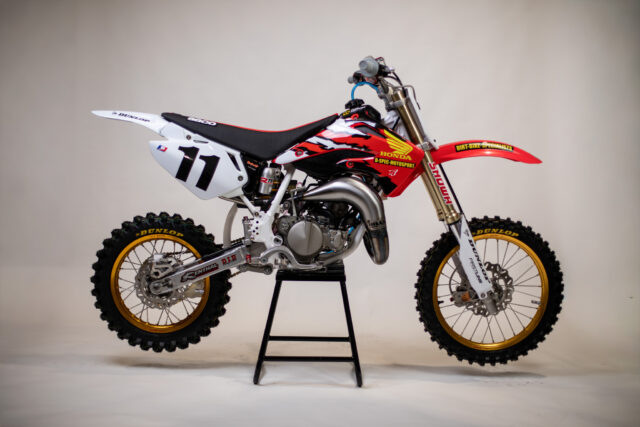
Project: Honda CR85R 2005 Restomod
From a seized bike bought for $600 to a meticulously rebuilt CR85R restomod, this project is both a showcase of D-Spec craftsmanship and a tribute to the roots of 1990s motocross.

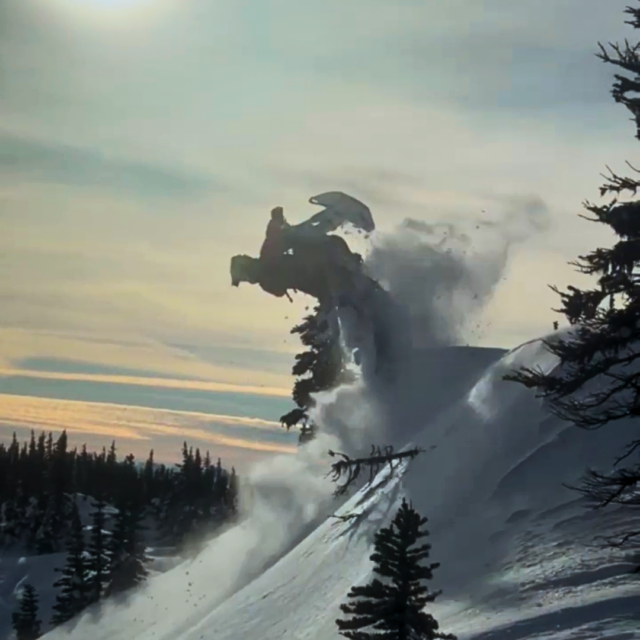
Snowbike Tuning Under Constant Load
Snowbike riding places an engine in conditions that exist nowhere else. Constant load, cold and humid air, and sustained wide-open throttle fundamentally change how calibration must be approached. This article explores why motocross-based mapping fails in snowbike applications, and how a dedicated tuning philosophy improves both performance and reliability in deep snow.