Snowbike Tuning Under Constant Load

Publié le 15 January 2026
Snowbike Blake Davies

Why Track Dynamics, Cold Air, and Sustained Throttle Change Engine Calibration.


Snowbike Is Not Motocross in Winter

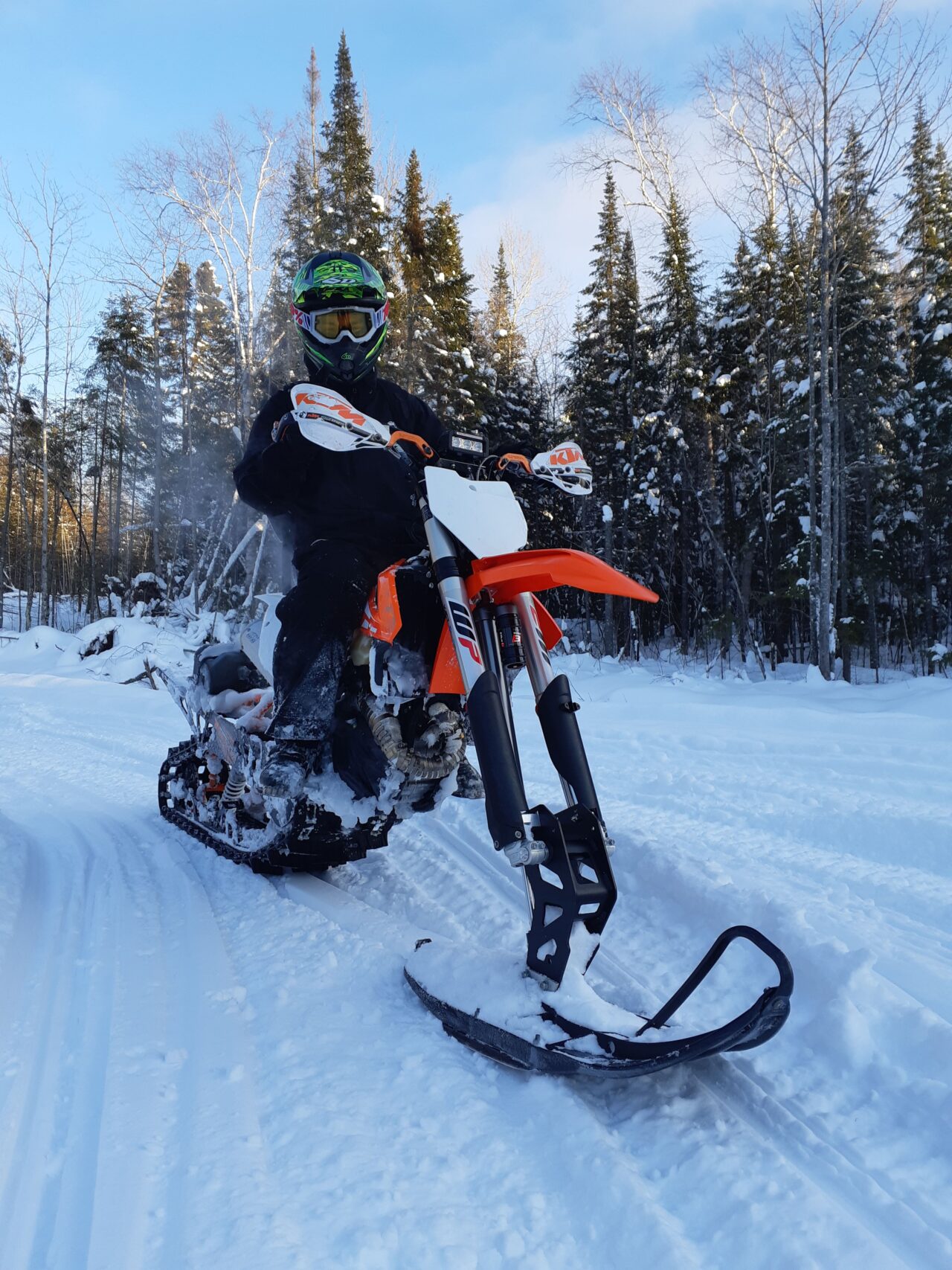
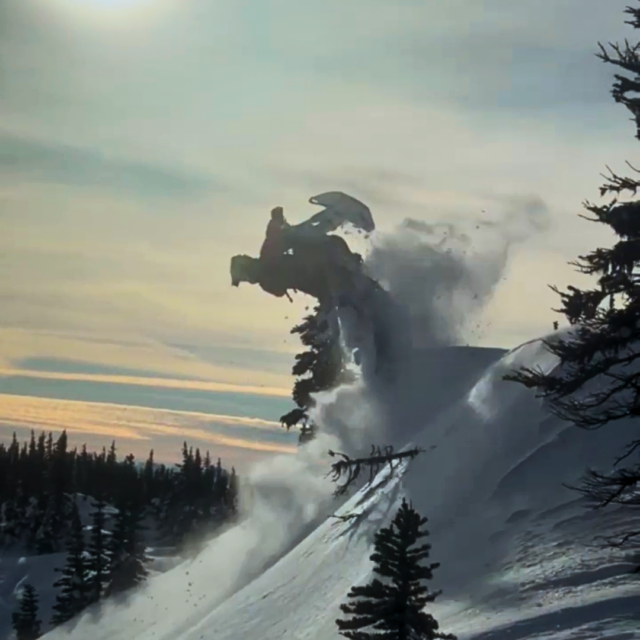
Imagine a snowbike climbing a long face in deep powder, throttle pinned, track fully loaded, with no bumps to unload the engine and no moment for mechanical relief. Attempting to tune that engine using motocross logic is a fundamental mistake. Snowbike riding creates operating conditions that simply do not exist in MX: load becomes constant instead of variable, traction replaces periodic hwheelspin, intake airflow is exposed and unrestricted, and engine temperature behaves unpredictably in extreme cold.

As David explains, “Snowbike conditions are completely different from anything we see in motocross. The way the engine is loaded and the way the throttle is used changes everything.”

Snowbike is not motocross adapted for winter — it is a distinct mechanical discipline that requires its own tuning logic.

 
The First Challenge: Constant Track Load

The most fundamental mechanical difference between a snowbike and a dirt bike lies in rotational mass. A track carries significantly more rotating mass than a wheel and, once moving, places the engine under near-constant load. In real snowbike conditions, it is common for the throttle to remain fully open for extended periods, a situation that simply never occurs in motocross.

In MX, the terrain constantly unloads the engine. Whoops, jumps, braking zones, and traction changes cause continuous fluctuations in RPM and load, repeatedly relieving thermal and mechanical stress. Snowbike riding removes most of those relief zones.

As David puts it, “In motocross, the engine is constantly changing RPM and load because of the terrain. In snowbike, the load is higher, but much more constant.”

This constant load reshapes how heat accumulates in the engine and shifts the importance of torque delivery. Midrange pull and sustained output become far more critical than the tractability required for motocross, because the track must be kept rotating efficiently to maintain flotation in snow.


Why a Snowbike Mapping is not well suited for MX

This is where snowbike tuning truly separates itself from motocross.

Cold air is denser, but snowbike conditions introduce an additional variable that is often overlooked: humidity. Snow dust keeps moisture suspended in the air, particularly at very low temperatures.

“The added air density is partly canceled out by the large amount of humidity in the air,” David explains. “The colder it gets, the more that moisture stays suspended.”

Fueling must therefore be adapted not only for temperature, but for sustained load and altered intake behavior.

If engine temperature remains too low, excessive fueling can dilute the oil film on the cylinder wall and accelerate wear. On the other end of the spectrum, lean conditions created by open intakes and free-flowing exhausts can rapidly increase combustion temperatures during long wide-open throttle runs. Both scenarios are common when MX-based maps are reused without snowbike-specific calibration, and both can be catastrophic over time.

Ignition timing also becomes a durability parameter. Dense air increases cylinder pressure, and under sustained load with prolonged WOT, timing strategies designed for MX simply do not apply. Motocross ignition maps assume short bursts of load and frequent RPM variation, while snowbike riding offers neither. Timing must be controlled carefully to manage detonation risk while maintaining predictable torque delivery.

Deceleration behavior further highlights the difference. With a wheel, engine braking helps manage speed. With a track, excessive engine braking becomes a liability.

“The massive friction created by the track allows us to reduce engine braking,” David explains. “It helps keep the ski on top of the snow instead of diving when you close the throttle.”

What would feel like freewheeling on a dirt bike becomes essential in snow.

Finally, throttle response takes on a completely different role. Snowbike riding often involves abrupt transitions from closed throttle to fully open, particularly when the track loads suddenly in deep powder. Combined with an open intake system, hesitation is unacceptable.

“The increased and connected throttle response allows you to direct the bike very precisely,” David notes.

In snowbike conditions, throttle response becomes a steering tool as much as a power control — a characteristic that would feel aggressive or unpleasant in motocross, but is essential in snow.
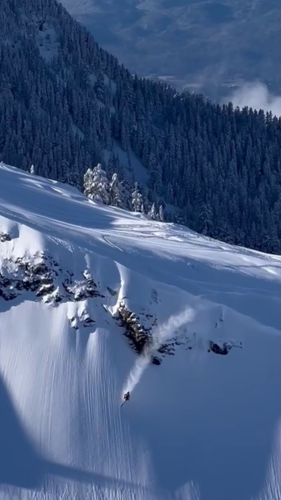
« In snowbike applications, the load is higher — but more importantly, it’s constant. That sustained load completely changes how the engine operates and forces a different calibration approach, focused as much on reliability as on performance. »

Intake and Exhaust: Different Physics, Different Priorities

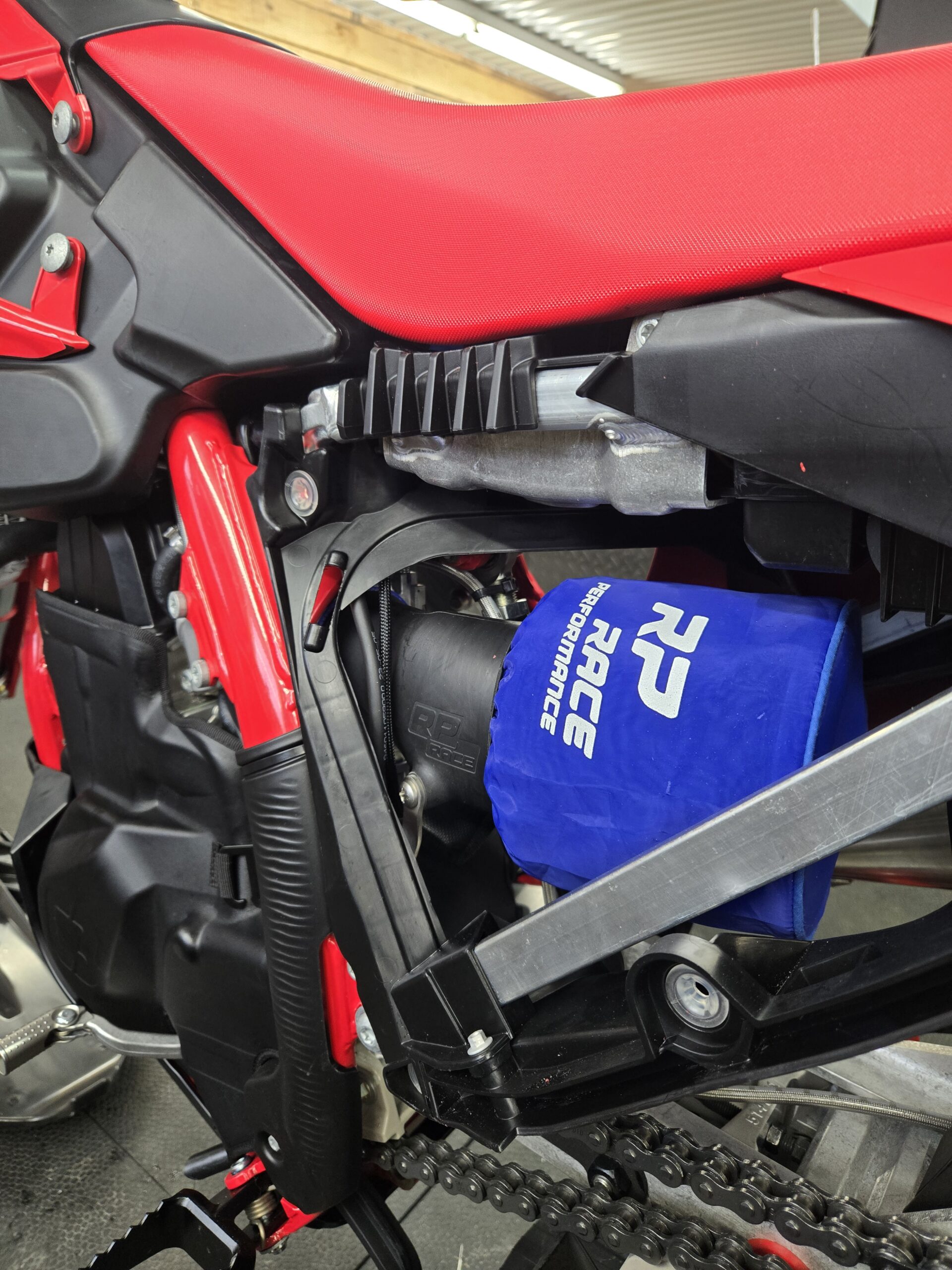
Motocross intakes are designed to breathe hot, dusty air. Snowbike intakes must first evacuate snow to prevent accumulation and blockage. Bodywork beneath the airbox is often removed to allow snow to escape, exposing the intake directly to atmospheric pressure and significantly altering airflow characteristics.

Snowbike-specific intake systems typically rely on open cage designs using multiple layers of Outerwears material rather than oiled foam filters.

“Our number one snowbike intake choice is the RP Race system,” David explains. “The velocity stack design offers a better balance between increased flow and maintaining air velocity.”

Structural support also matters: unsupported intakes can stress the rubber boot between the throttle body and engine, leading to long-term reliability issues that are often overlooked.

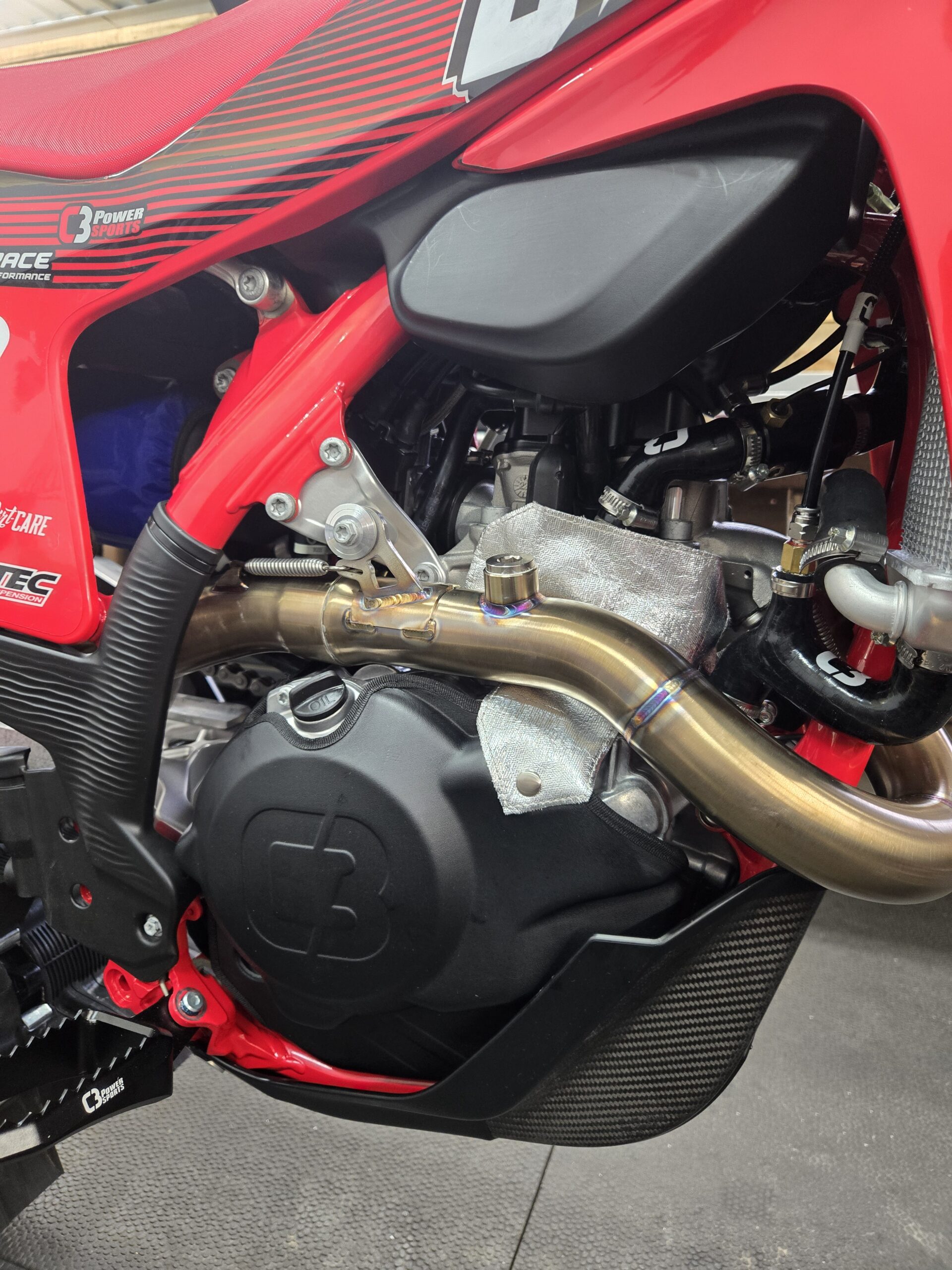
Exhaust behavior changes as well. In snow, torque accessibility matters. RP Race offers two silencer configurations, with the Big Core version delivering noticeably stronger throttle response through the lower two-thirds of the RPM range. Peak power remains similar at high RPM, but the Big Core builds momentum earlier and more authoritatively.

“That midrange hit, which would probably feel unpleasant in motocross, quickly initiates track rotation and makes it much easier to reach maximum track speed,” David explains.

In deep snow, the goal is not smooth acceleration for traction, but rapid track speed to stay on top of the surface.


Case Study: The 450 Snowbike Edition

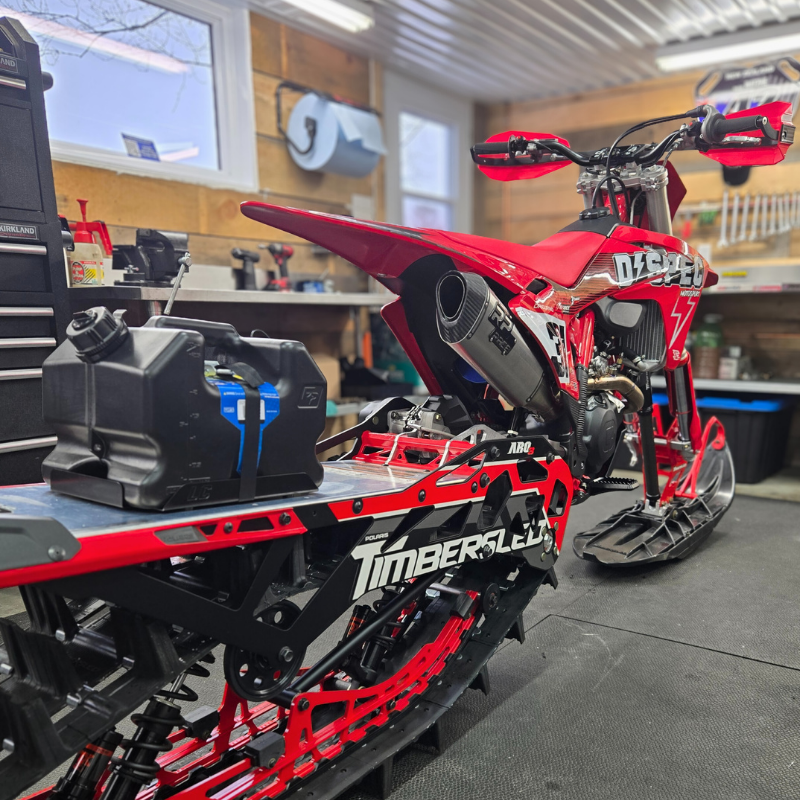
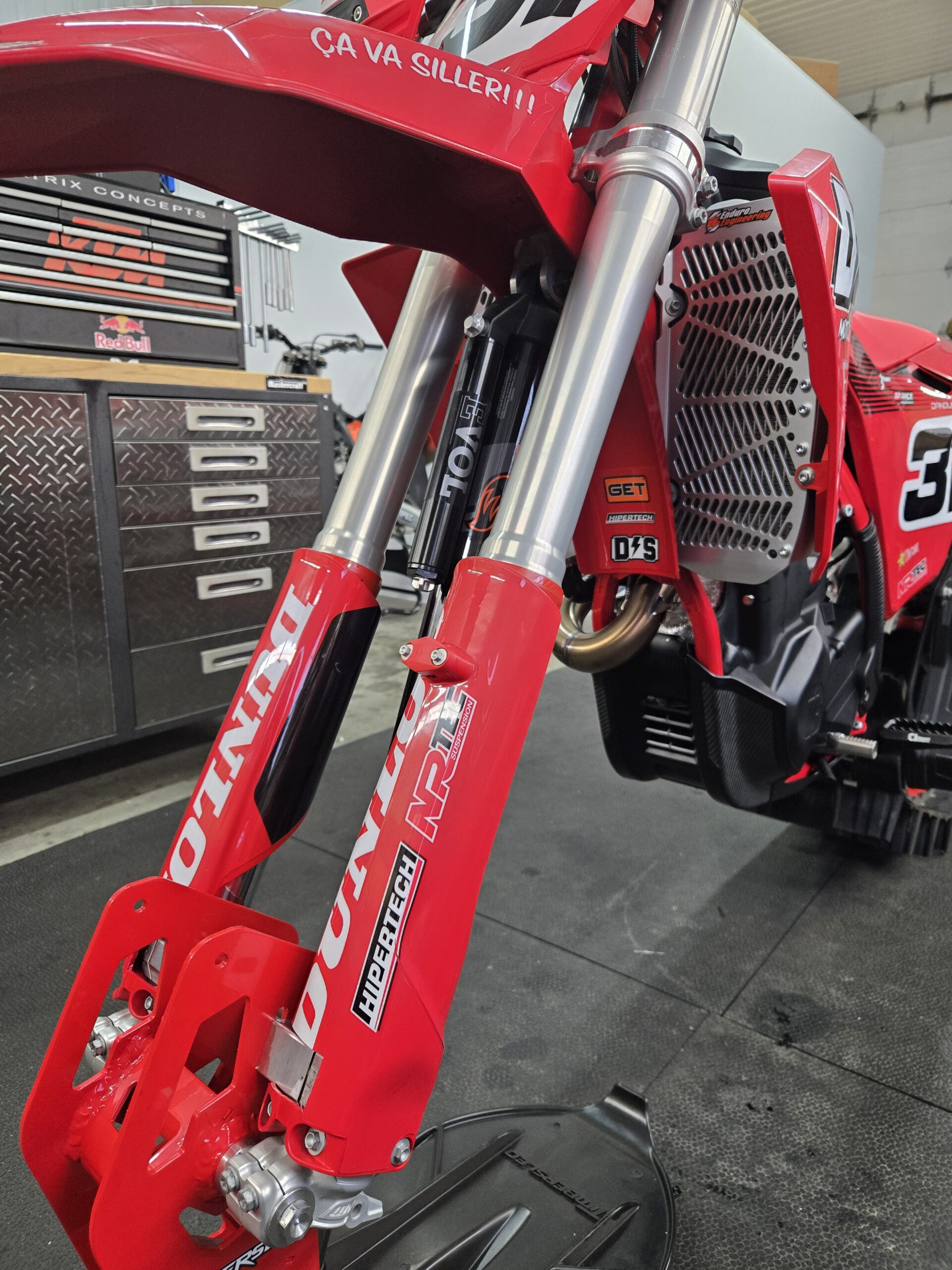
The 450 Snowbike Edition is not a repurposed MX tune. It is built around a dedicated snowbike power package, where mapping, intake behavior, ignition strategy, and throttle response are all developed as a coherent system rather than independent adjustments. The goal is not to adapt motocross components to winter conditions, but to define a configuration that works as a complete snowbike setup. During testing, particular attention is paid to engine temperature stability during long wide-open throttle runs.

“What we watch closely is making sure engine temperature doesn’t spike during long periods at 100% throttle,” David explains.

The most noticeable improvement in rideability appears at lower RPM, where AFR strategies adapted to snowbike intake systems create a direct and predictable throttle connection. This authoritative response also reduces clutch dependency.

“With that kind of response, it’s normal to rely much less on the clutch to bring engine RPM up,” David notes.

Reduced clutch use translates directly into less heat, less wear, and lower rider fatigue during long snowbike sessions.

Dyno and Terrain: Different Roles in Snowbike Tuning

In motocross, dyno data can predict a decent portion of real-world behavior. In snowbike tuning, the dyno plays a different role. It validates behavior rather than defining it. Real snow conditions remain the final judge, whether on hard-pack, deep powder, or in rapidly changing temperatures.

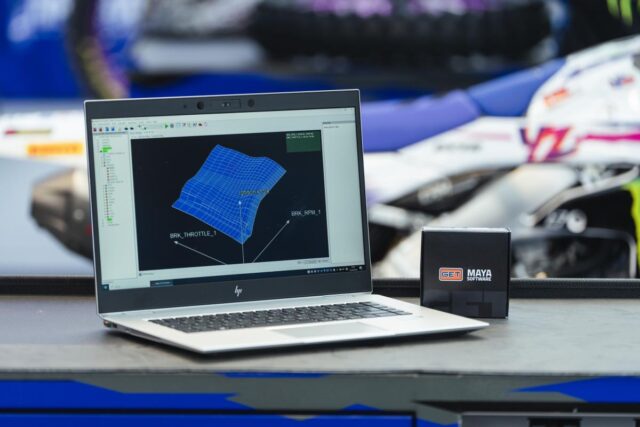
Data logging remains critical even in extreme cold. Monitoring AFR, IAT, ECT, and MAP ensures that the calibration remains stable as conditions shift mid-ride. Snowbike tuning exists at the intersection of controlled measurement and uncontrolled terrain.


Real Testing, Real Results

D-Spec snowbike mappings have been tested for years across a wide range of Canadian conditions — from cold, humid forests in Quebec to wide-open mountain terrain in the West.

“Those bikes have accumulated countless hours at full throttle,” David explains, “in conditions where small calibration errors show up very quickly.”

Experienced riders consistently report gains in control, predictability, and reduced fatigue over long rides — the type of performance that truly matters in snow.


Conclusion: Snowbike Is Its Own Discipline

Snowbike demands a dedicated tuning philosophy. Constant load, cold and humid air, unique intake and exhaust behavior, and extreme traction conditions fundamentally change how engines must be calibrated. The 450 power package Snowbike Edition is the result of years of testing, data analysis, and rider feedback — not a seasonal adjustment.

In the end, snowbike tuning isn’t about chasing numbers. It’s about that moment in deep snow when the throttle becomes instinctive, the track keeps floating, and the engine continues to pull — clean, controlled, and relentless — long after traction should have disappeared.


For riders interested in installing a complete D-Spec Power Package, the system described here — including GET ECU calibration and the RP Race exhaust — is now available through our online store. Each package is prepared to order and calibrated according to your bike and riding style.

Picture of David Gingras

David Gingras

With over 20 years in the Dirt Bike world, and EFI tuning in-depth expertise, David helps riders of all levels — including pros at the Canadian Championship level — turn their machines into true performance tools.

In his articles, he breaks down technical concepts with clarity, shares dyno and track-tested methods and gives you the insights you need to unlock every ounce of performance… where it really matters.

Articles similaires

Snowbike Tuning Under Constant Load

Snowbike riding places an engine in conditions that exist nowhere else. Constant load, cold and humid air, and sustained wide-open throttle fundamentally change how calibration must be approached. This article explores why motocross-based mapping fails in snowbike applications, and how a dedicated tuning philosophy improves both performance and reliability in deep snow.

Lire la suite »

Leave a Reply

Your email address will not be published. Required fields are marked *


The reCAPTCHA verification period has expired. Please reload the page.

Leave a Reply

Your email address will not be published. Required fields are marked *


The reCAPTCHA verification period has expired. Please reload the page.


Which parts are you looking for ?

    Rider

    Bike

    Parts

    Tell us about your project!


    Tell us about your project!


    Tell us about your project!


    Tell us about your project!


    De quelles pièces avez-vous besoin ?

      Pilote

      Moto

      Pièces

      Remplissez le formulaire en lien avec l'ECU désiré et nous pourrons vous conseiller au besoin.

        Pilote

        Moto

        Pièces

          Pilote

          Moto

            Pilote

            Moto

              Pilote

              Moto

              Parlez-nous de votre projet!

              Error: Contact form not found.