What’s in a Power Package? The D-Spec Method — With a Focus on the KTM 500EXC-F

Publié le 5 December 2025
Power Package 500 (ECU GET)

There’s a common misconception in the tuning world: that performance is a number. A graph. A peak horsepower figure to win an argument. At D-Spec, that way of thinking never made sense. Power, by itself, is nothing. What matters is control. Predictability. The ability for a rider to open the throttle on a loose off-camber climb and feel the rear tire hook up instead of lighting up. To drop into a rocky, first-gear singletrack without the bike stalling at the worst possible moment. To carry speed without the machine fighting back.

« Anyone can open the intake and add a pipe. That doesn’t mean the bike rides better, » says David from D-Spec

And this is where the idea of a Power Package begins — not as a parts bundle, but as an integrated system where every parameter influences the next. The goal is not maximum output. The goal is a bike that behaves exactly the way you expect… even when the terrain doesn’t.


The 500 EXC-F as a Case Study

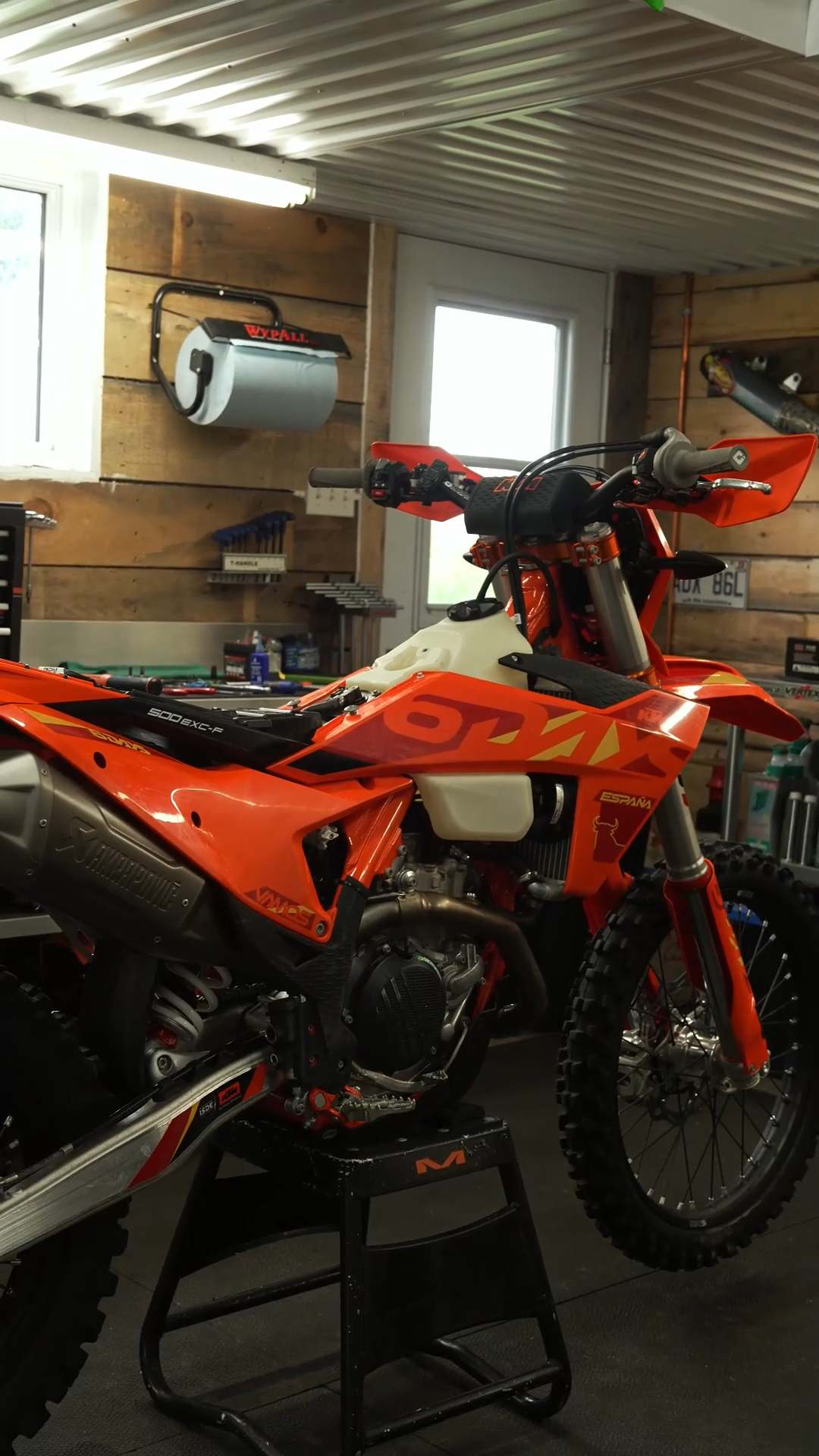
Few platforms make this point as clearly as KTM’s 500EXC-F. From the factory, it’s a brilliant dual-sport machine — torquey, versatile, able to handle pavement and forest in the same day. But to meet modern emissions and noise standards, KTM ships it with lean fueling, restricted ignition timing and an intake and exhaust system that chokes more than it breathes. The bike runs, but not the way the chassis or the engine architecture were meant to perform. Riders feel hesitant throttle transitions, harsh or “grabby” decel, and occasional flameouts in technical terrain.

This bike became one of D-Spec’s primary testbeds. And the transformation, once tuned, is unmistakable. Not louder. Not wilder. Just tighter, more linear, more confident everywhere from idle to mid-range torque. “It’s one of the clearest before-and-after examples. The bike just makes sense once it’s mapped properly,” says David.

« It’s one of the clearest before-and-after examples. The bike just makes sense once it’s mapped properly, », says David.

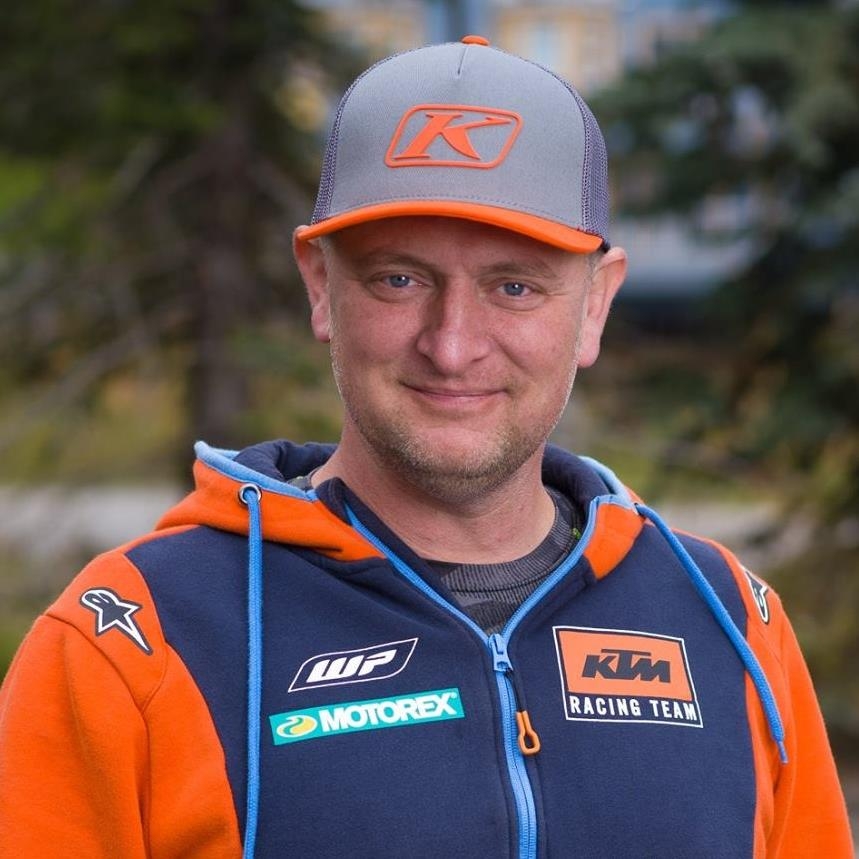
Lee Martin - rally connect and ambassador KTM canada

«...The amount of power that it added to that motorcycle was astronomical feeling. If you're not in the right position, you better be holding on tight. A real game changer to make a stock KTM 500 EXC-F turn into an off road weapon or a dual sport, high performance machine...»

Why D-Spec Builds Every Package Around GET

Choosing GET wasn’t random, and it wasn’t based on brand hype. It emerged from years of testing, logging, troubleshooting, and rider feedback.

The first reason is simple: support and reliability. D-Spec works closely with a highly qualified GET technician who provides immediate, in-depth assistance for complex mapping questions or edge-case sensor behavior. When you push tuning to this level, that expertise matters.

Then there is the quality of GET’s base maps. GET’s calibration files are already exceptionally sound — especially on modern KTM platforms. They respond well to modification, scale predictably, and don’t introduce unexpected AFR swings when you make changes in one table. When D-Spec begins a project, the starting point is already better than most “finished” maps on other systems.

There’s also an efficiency gain: keeping all tuning projects within the GET ecosystem means every lesson generalizes. A breakthrough on a 500EXC-F might apply to a 350, or to a 250 SX-F under different load conditions. This “transfer learning” accelerates map refinement over time. Customers benefit because every D-Spec map is covered by a satisfaction guarantee — updates are free as improvements roll out.

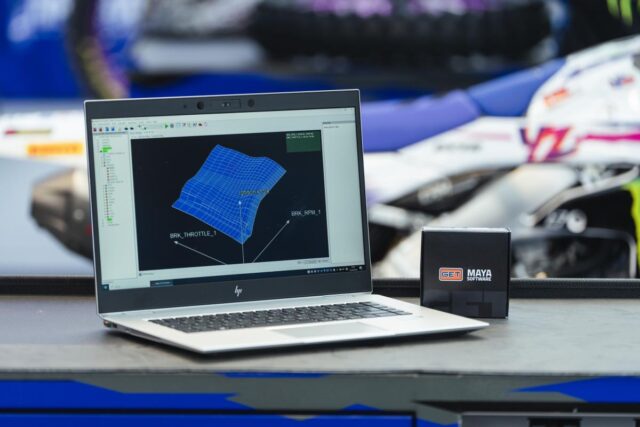
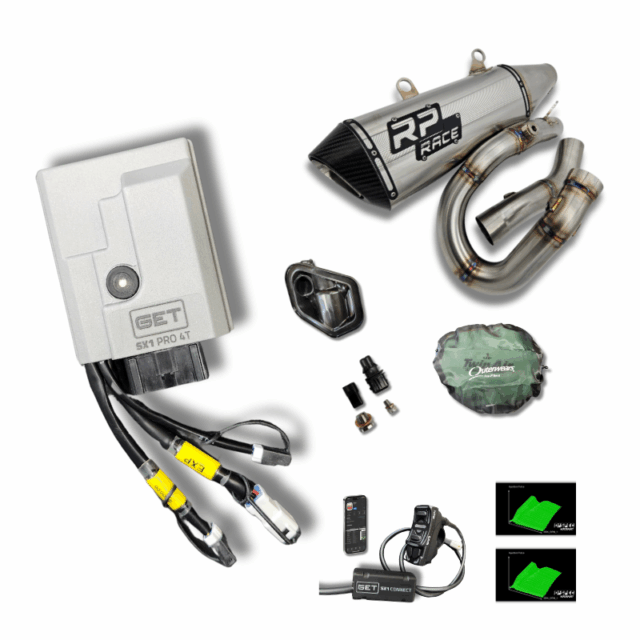
But the biggest difference lies in what GET allows the tuner to access. Fuel tables, ignition tables, warm-up enrichment, throttle-response shaping, altitude compensation curves… it’s all available, and it all interacts. GET’s WiGET app makes this even more powerful. The SX1-Connect Wi-Fi unit allows D-Spec to adjust maps based on rider feedback without shipping the ECU back and forth. Riders can view sensor logs right from their phone. The handlebar SX1 switch adds dual mapping, adjustable GPA traction control, quickshifter enablement on KTM 4T engines, and launch control — and these aren’t gimmicks. They’re tightly integrated tools in the mapping logic.


The GET Mapping Process – More than Fuel and Spark

A proper Power Package involves far more than “adding fuel until it feels better.” Modern engines require precise synchronization of multiple systems. Take ignition timing, for instance. On the 500EXC-F, advancing or retarding timing in the 2,500–4,500 RPM range drastically affects how the bike behaves when modulating throttle in rocks or roots. Too much advance and the engine becomes sharp and fatiguing; too little and the bike feels lazy, forcing riders to clutch more, which wears them out.

Fuel mapping is just as nuanced. You don’t simply “richen the low end.” You adjust specific throttle-position bands to maintain predictable torque without drowning the engine or triggering false lean readings from the sensors. In sandy terrain, for example, D-Spec often builds more robust fueling in mid-TPS openings to avoid hollow response under load. In tight singletrack, smoother low-TPS transitions matter more.

Environmental factors complicate everything. Barometric pressure and air temperature change air density, and GET’s correction factors allow D-Spec to neutralize these effects — but only when calibrated correctly. We dial the base map precisely, then let correction handle small fluctuations, not large ones.


Why Exhaust Choice Matters More Than People Think

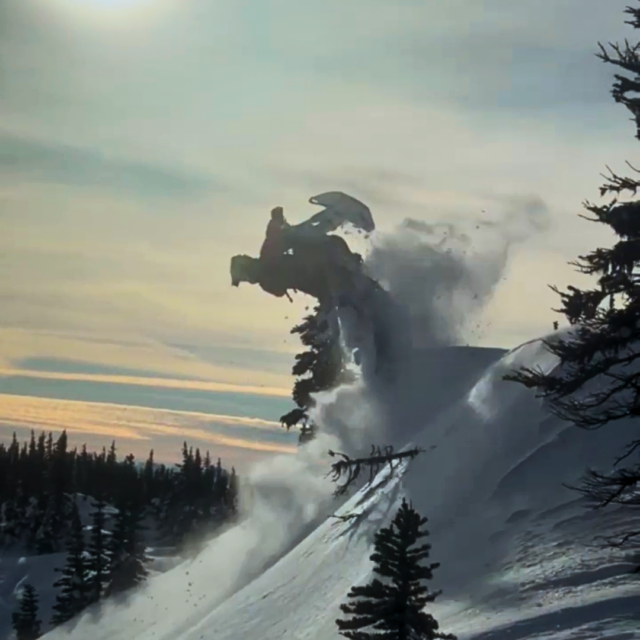
Most riders pick exhausts based on sound or brand image. D-Spec tested them based on power characteriscics and quality of construction. RP Race consistently produced top-performing exhaust and great construction quality. On the 500EXC-F, RP’s header design matchs the engine character and provide excellent power gains. If you really want the extra oomph for wide-open forest roads or to spin that snowbike track, they have what you it takes.
« Many riders install an aftermarket ECU or full exhaust and expect the bike to instantly improve. But tuning is not modular. One wrong assumption can break the system.»

motocross KTM 500 EXC-F
The Dyno – and Why It’s Only Half the Job

D-Spec’s tuning is focused solely on dirtbike applications, but dyno numbers alone don’t build a Power Package. A map can look perfect on a graph and still feel wrong. Dyno work begins with AFR, RPM, and TPS logging. Decel behavior is examined closely; an AFR that looks “normal” may still indicate poor fuel cut logic, producing harsh engine braking in tight terrain.

Then the testing continues outside. David logs throttle traces on trail rides, comparing expected sensor readings to real conditions. If a rider reports a hesitation when rolling back into the throttle in third gear at low RPM, D-Spec can check whether ignition timing or throttle-enrichment tables align with what the rider felt. This “closing the loop” between dyno and terrain is what prevents a map from being technically correct but practically useless.

The Myth of Plug-and-Play

Many riders install an aftermarket ECU or full exhaust and expect the bike to instantly improve. But tuning is not modular. One wrong assumption can break the system. Riders often forget to reset TPS, or they combine a free-flow pipe with fuel tables designed for a restrictive stock exhaust, causing the bike to run erratically. Harsh decel, flameouts, or a “nervous” feel at small throttle openings are all symptoms of mismatched components.

A Power Package solves this by approaching the bike as a whole. Every adjustment is designed to complement the next.

When Expertise SPeaks: Lee Martin on the 500EXC-F

Tuning doesn’t live on a dyno sheet. It lives on the trail — in the moments where a bike must respond instantly and predictably. That’s why rider feedback is one of the most valuable tools in the D-Spec process. And few riders spend more time testing bikes in real terrain than Lee Martin, owner of Rally Connex and KTM Canada Ambassador.

Here’s how the 500EXC-F Power Package behaved in his hands.

«Right away at idle, the bike felt like it ran the way. It should not clogged up. Due to emissions that the bike needs to pass in order to import it into north america. The bike Doesn’t flame out and it gives me that low end Idle performance that we all want. For example, you’re approaching a log, and you need to do a single blip. The bike no longer flames out and leaves you disappointed.

It performs excellent. The top end of the bike is ridiculous. The amount of power that it added to that motorcycle was astronomical feeling. If you’re not in the right position, you better be holding on tight. A real game changer to make a stock KTM 500 EXC-F  turn into an off road weapon or a dual sport, high performance machine. Highly recommended for all KTM 500 EXC-F  operators» – Lee Martin, owner Rally Connex and KTM Canada Ambassador

 
Conclusion – The D-Spec Way

Building a fast bike is easy. Building a bike that works with you — and keeps working — is methodical. It’s a system. That system lives in every D-Spec Power Package: precision control through GET, predictable airflow through RP Race, dyno calibration validated by terrain testing, and maps refined not just for machines, but for riders.

Peak numbers don’t win singletrack. Control does. Confidence does. Trust does. And that’s what a D-Spec Power Package delivers.

A sincere thank you to Lee Martin for taking the time to test and share his impressions of the 500EXC-F Power Package. His experience with Rally Connex — Canada’s largest GPS-guided motorcycle event organization — offers a rare, high-quality perspective from someone who truly lives on a motorcycle. à https://rallyconnex.com/

For riders interested in installing a complete D-Spec Power Package, the system described here — including GET ECU calibration and the RP Race exhaust — is now available through our online store. Each package is prepared to order and calibrated according to your bike and riding style. An explanatory video on how to install it is also available.

Picture of David Gingras

David Gingras

With over 20 years in the Dirt Bike world, and EFI tuning in-depth expertise, David helps riders of all levels — including pros at the Canadian Championship level — turn their machines into true performance tools.

In his articles, he breaks down technical concepts with clarity, shares dyno and track-tested methods and gives you the insights you need to unlock every ounce of performance… where it really matters.

Articles similaires

Snowbike Tuning Under Constant Load

Snowbike riding places an engine in conditions that exist nowhere else. Constant load, cold and humid air, and sustained wide-open throttle fundamentally change how calibration must be approached. This article explores why motocross-based mapping fails in snowbike applications, and how a dedicated tuning philosophy improves both performance and reliability in deep snow.

Lire la suite »

Leave a Reply

Your email address will not be published. Required fields are marked *


The reCAPTCHA verification period has expired. Please reload the page.

Leave a Reply

Your email address will not be published. Required fields are marked *


The reCAPTCHA verification period has expired. Please reload the page.


Which parts are you looking for ?

    Rider

    Bike

    Parts

    Tell us about your project!


    Tell us about your project!


    Tell us about your project!


    Tell us about your project!


    De quelles pièces avez-vous besoin ?

      Pilote

      Moto

      Pièces

      Remplissez le formulaire en lien avec l'ECU désiré et nous pourrons vous conseiller au besoin.

        Pilote

        Moto

        Pièces

          Pilote

          Moto

            Pilote

            Moto

              Pilote

              Moto

              Parlez-nous de votre projet!

              Error: Contact form not found.